2015-2016 Season

In March A Tree We Planted. Part 1.

By: Eric Stroud, dramaturg (NOTE: Mother Courage and Her Children opened on Friday to a major success. Tickets are still available for other showings, but they are going fast. You can buy them online by visiting this link.)
THE SONG OF SHELTER

IN MARCH A TREE WE PLANTED
TO MAKE THE GARDEN GAY.
IN JUNE WE WERE ENCHANTED:
A LOVELY ROSE WAS BLOOMING
THE BALMY AIR PERFUMING!
BLEST OF THE GODS ARE THEY
WHO HAVE A GARDEN GAY!
IN JUNE WE WERE ENCHANTED.

WHEN SNOW FALLS HELTER-SKELTER
AND LOUDLY BLOWS THE STORM
OUR FARMHOUSE GIVES US SHELTER.
THE WINTER’S IN A HURRY
BUT WE’VE NO CAUSE TO WORRY.
COSY ARE WE AND WARM
THOUGH LOUDLY BLOWS THE STORM:
OUR FARMHOUSE GIVES US SHELTER.

This lovely song comes in scene ten of Mother Courage and Her Children. Sung by a farmer and his family, it seems to be a simple ballad of gratitude for a garden in the spring and a house that keeps their family warm in the winter. It is a pretty song, but to be frank, random. When I first heard it, I wondered why would Brecht include it in his play. However, after some research I was surprised by what I found. Lets focus on the planting of the tree for a moment. A large part of director David Morgan's concept for this show revolves around a tree that sits center stage.
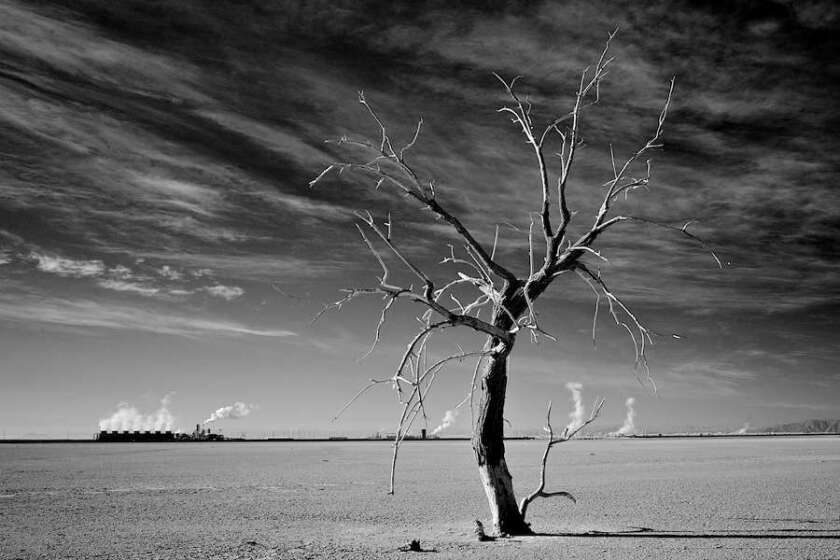
deadtree

When I first spoke to David about his concept for the show, he spoke of how he wanted to emphasize that any war we have today, is simply evidence that human kind has not learned from its mistakes. He wanted his audience to stop and think for a moment about what war has ever actually solved, and whether or not it is ever the answer. When he told me about the tree, I asked him what he wanted it to mean. He sat for a moment and pondered. "It's human kind," he finally answered. He went on to tell me that the tree would be a dead one, just as war mongering is the death of the human race. When are meeting was over, I immediately started doing research. Now that I understood my director's usage of a tree in the play, I wanted to know what Brecht meant by mentioning it in this song. In most translations of Mother Courage the word 'tree' or 'trees' is mentioned at least ten times. Now for a noun in a play, just over 100 pages, this is a fair amount of usage. Well, after doing some digging I came across some very interesting information. Adolf Hitler loved oak trees.

nazioaks

In fact, there were over 130 oak tree saplings presented by Hitler to gold medalists during the 1936 Olympic Games in Germany. I know, what the heck?

"The oak tree was considered the sacred tree of Germany. Hitler loved oak trees and had them planted all over the Reich as "concordant with the spirit of the Führer." Oak leaves and acorns were even the symbols of the SS, Hitler's green Praetorian Guard."Read more: http://bit.ly/1MfvYUb

So what does this have to do with Brecht's mention of trees so many times in Mother Courage? Well, as I have mentioned before, this play was written by Brecht as an anti-war, direct response to the Nazi Regime of World War II.
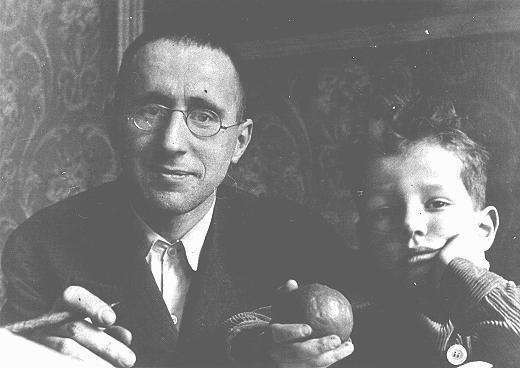
brecht&son

Although the play did not go on stage until prior to Hitler's regime (due to Brecht having to hide from them in Poland), we know that Brecht outwardly condemned the Nazi regime, which was his reason for hiding in the first place.

With this knowledge in mind, the planting of the tree by the farmer takes on knew meaning. While we do not know for sure, perhaps inclusion of the song in the play is a commentary on Hitler's attempt to use oaks as a means of manipulation.  Just as Hitler seemed to have used the oaks as a mask for the sinister, the farmer uses the trees as a means of willful ignorance to the war going on outside his home. Brecht certainly despised those Germans who would simply submit to the extermination of Jews and an oppressive dictatorship if it meant a joyful Spring. However, if you come and see the play, you can see what happens to this farmer and his family.

David Morgan's concept also took on new meaning for me as well. Though he did not necessarily mean it to, the tree became an omen for future generations. It stood as a warning to those of our generation who ignore our views on war, with a willful ignorance. However, Dave's concept delves deeper. Tune in to the next post to learn what other elements of the show apply to Dave's concept; "any war we have today, is simply evidence that human kind has not learned from its mistakes."

Related Articles

data-content-type="article"

A Pirate Slideshow

March 30, 2021 12:00 AM
by Shelley Graham, dramaturg Often one of the dramaturg's major responsibilities is to help the cast and production team understand and truly live in the world of the play. Because of the condensed timeline for this show, there was a dramaturgy presentation as part of the first rehearsal. The cast was given some basic information about Gilbert and Sullivan's history and a quick primer on theatre in the Victorian era, and that was it! The rest of the historical context, visual image research, and production history was available to the cast as part of an online learning module that they could access outside rehearsal time. But as we moved into the unique process of first recording the final tracks and then going into blocking and choreography, it became clear the another of my responsibilities as a dramaturg would be to document this creative approach. Below is a video slideshow of our process, including the studio recording, blocking and choreography rehearsals, and the filming. We hope you enjoy learning a bit more about how we created this one-of-a-kind performance!
overrideBackgroundColorOrImage= overrideTextColor= promoTextAlignment= overrideCardHideSection= overrideCardHideByline= overrideCardHideDescription= overridebuttonBgColor= overrideButtonText= promoTextAlignment=
data-content-type="article"

The Pirate Process from the Performer's Perspective

March 25, 2021 12:00 AM
by Shelley Graham, dramaturg [caption id="attachment_7692" align="aligncenter" width="960"] Director Tim Threlfall works with four actors in an early rehearsal.[/caption] Each performer in this production had a unique opportunity to create a character in ways we've never tried before. Such singular opportunities bring with them challenges. I reached out to our performers in the middle of blocking and choreography rehearsals, to see what they thought about the process. Here's what a few of them had to say. One of the challenges I've experienced with this production is the need to exactly replicate every inflection in my dialogue. People speak and inflect the same words differently in different contexts, on different days, and for endless reasons. Because we recorded the audio before filming, the challenge was to match our performance with the inflection we had on the recording day. I'm a fairly emotive person, and I rarely say things exactly the same way twice. In order to be successful with this production, I had to spend a lot of time listening to the recordings of myself, a strategy I've not used in preparing for roles in the past. Brendon French During this process, it was a challenge to not have in-person rehearsals when learning the score. I personally learned how to plunk out my notes on the piano, worked with those in my vocal part, and was able to meet privately with Korianne [Johnson, music director] to confirm that I was on the right track vocally, and that I was ready to record in a group! This has been such a wonderful experience despite the challenges! I have learned so much and am grateful to be a part of this production Riley Holmes I think an obvious challenge is covid. It's been affecting this whole process! The worst part about it is that not everyone can be on the stage, so I feel like it is a little more difficult to be able to react to the other actors that are "on stage." You just have to imagine that they are there! Luke Gonzalez I think the biggest challenge for me was having to learn everything alone, without any guidance or direction from either the vocal or acting directors at first. It was super interesting and a great learning opportunity, because I got to put my own spin on everything before it was altered by the directors, but it was still really hard. I think the way that I overcame this challenge was just lots of time putting into memorizing and learning and practicing. Practice makes better! AJ Klomp Highlights from Gilbert and Sullivan's Pirates of Penzance is live streaming March 31, April 1-2 at 7:30 pm. Don't miss it!
overrideBackgroundColorOrImage= overrideTextColor= promoTextAlignment= overrideCardHideSection= overrideCardHideByline= overrideCardHideDescription= overridebuttonBgColor= overrideButtonText= promoTextAlignment=
data-content-type="article"

Contemporary Dance Theater: Dance Creation and ASL

March 23, 2021 12:00 AM
by dramaturg, Susanna Bezooyen
overrideBackgroundColorOrImage= overrideTextColor= promoTextAlignment= overrideCardHideSection= overrideCardHideByline= overrideCardHideDescription= overridebuttonBgColor= overrideButtonText= promoTextAlignment=